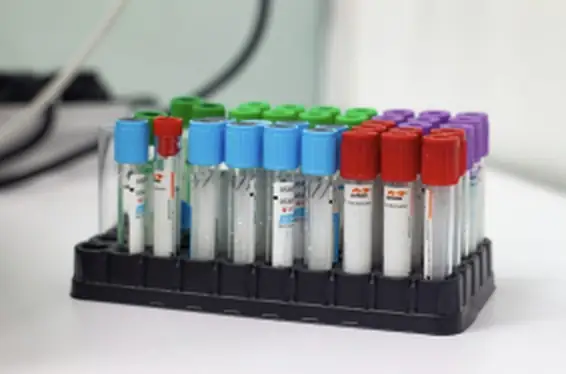
A high CRP level usually means there’s inflammation somewhere in the body. The number alone can’t say what’s wrong — but a simple home blood test can measure it.
C-reactive protein, or CRP, is one of the most frequently requested blood tests in Dubai, and one of the most frequently misunderstood. A high result sounds alarming. In reality it is a signal, not a verdict: it tells your doctor that inflammation is present somewhere in the body, but not where or why. Here is how to make sense of it.
What does the CRP test measure?
A C-reactive protein test measures the amount of CRP in your blood. Your liver makes this protein in response to inflammation, which makes it a useful marker when a doctor needs to assess a possible infection or inflammatory condition. Levels can rise within hours of the trigger and fall again quickly once it settles, so CRP is good at tracking what is happening right now.
Doctors may request a CRP test to:
- Check for signs of infection or inflammation when you have a fever or feel unwell.
- Help tell a bacterial infection, which tends to push CRP higher, from a viral one.
- Monitor conditions such as rheumatoid arthritis, lupus or inflammatory bowel disease.
- Follow your response to antibiotics or other treatment.
- Watch for complications after surgery.
Standard CRP vs high-sensitivity CRP
There are two versions of the test. Standard CRP is used when infection or active inflammation is suspected and measures the larger rises. High-sensitivity CRP (hs-CRP) detects very small amounts and is used in otherwise healthy people to estimate long-term cardiovascular risk. They answer different questions, so make sure you know which one is on your report.
What causes a high CRP level?
- Infections Bacterial infections such as pneumonia, urinary infections or an abscess often cause marked rises. Viral infections usually cause smaller ones.
- Autoimmune and inflammatory diseases Rheumatoid arthritis, lupus, vasculitis and inflammatory bowel disease can keep CRP raised for long periods.
- Injury or surgery Damaged tissue triggers inflammation as part of healing. CRP typically peaks two to three days after an operation and then falls.
- Long-term, low-grade factors Smoking, excess weight, poor sleep, uncontrolled diabetes and gum disease can all nudge CRP upwards without any obvious illness.
- Pregnancy and some medicines Late pregnancy and hormonal contraception can raise levels slightly; statins and anti-inflammatory drugs can lower them.
What is the normal CRP range?
Ranges depend on the laboratory and the units used, so always check the range printed on your own report. As a rough guide, many labs report a standard CRP below 10 mg/L (1 mg/dL) as normal; values between 10 and 100 mg/L suggest moderate inflammation or infection, and values above 100 mg/L usually indicate a significant bacterial infection or major inflammation that needs prompt medical review.
For hs-CRP, used for heart-risk estimation, results are read differently: under 1 mg/L is considered low risk, 1 to 3 mg/L average, and above 3 mg/L higher risk, provided there is no active infection at the time of the test.
What a high result does and does not tell you
A raised CRP confirms that inflammation is present and gives a sense of how much. It does not identify the cause or location. That is why doctors read it alongside your symptoms, an examination and other tests such as a full blood count, and why a repeat test a few days later is often more informative than a single value. A falling CRP during treatment is reassuring; a rising one prompts a rethink.
A mildly raised result in someone who feels well is common and often temporary. It becomes more important when it stays raised on repeat testing, when hs-CRP is high alongside other heart risk factors such as high cholesterol, or when it comes with symptoms.
When should you get tested?
- A persistent or recurring fever.
- Unexplained joint pain, swelling or stiffness.
- Symptoms of a known inflammatory condition, or to track treatment.
- Recovery after surgery, when your doctor wants to rule out infection.
- A previous raised result that needs follow-up.
- As part of a heart-health check, together with a lipid profile, when your doctor orders hs-CRP.
Preparing for the test
No fasting is needed for CRP on its own. If it is combined with cholesterol or glucose, your care team will tell you when to stop eating. Mention any recent illness, injury, vaccination or dental work, because all of these can raise CRP temporarily and change how the result is read.
Getting a CRP test at home in Dubai
A CRP test needs only a small blood sample. A DHA-licensed nurse or phlebotomist can collect it at your home, hotel or office, which is especially helpful when the person being tested has a fever and should not be sitting in a waiting room. Results are usually ready within 24 hours and sent privately to your phone. If the result is raised, a Willow doctor can visit to examine you, explain the number in context and decide whether anything needs treating.
This article is for general information and does not replace a consultation with a licensed doctor. Reference ranges vary between laboratories; always use the range on your own report.